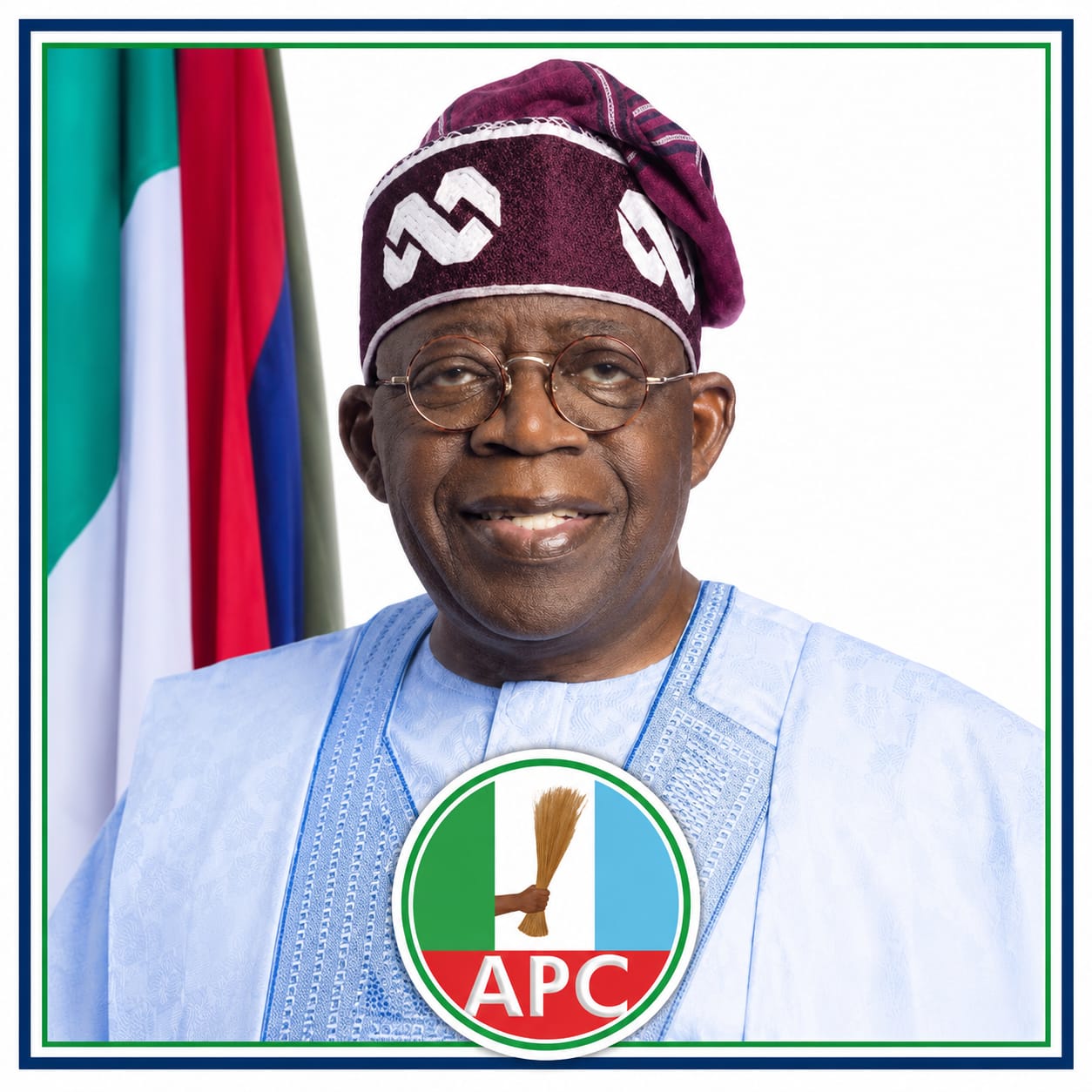
President Bola Ahmed Tinubu
| Presidential
| Presidential
President Bola Ahmed Tinubu, GCFR is the 16th President of the Federal Republic of Nigeria and one of the country's most influential political leaders. Born on 29 March 1952 in Lagos, he built a successful career in accounting and business before entering public service. He studied Business Administration and Accounting in the United States and worked with leading international companies, including Mobil Oil Nigeria, where he rose to senior management positions.
Tinubu began his political career in 1992 when he was elected Senator representing Lagos West under the Social Democratic Party (SDP). Following the annulment of the June 12, 1993 presidential election, he became a prominent member of the pro-democracy movement, joining the National Democratic Coalition (NADECO) in the struggle to restore democratic governance in Nigeria. His activism forced him into exile during the military era before his return after the restoration of democracy.
In 1999, he was elected Governor of Lagos State and served two terms until 2007. His administration is widely associated with major reforms in public finance, infrastructure, transportation, education, healthcare, and tax administration. Under his leadership, Lagos significantly expanded its internally generated revenue and implemented institutional reforms that strengthened governance and service delivery.
After leaving office as governor, Tinubu played a leading role in building a united political opposition that culminated in the formation of the All Progressives Congress (APC). His efforts contributed to the APC's victory in the 2015 presidential election, marking Nigeria's first democratic transfer of power from a ruling party to an opposition party.
In 2023, Bola Ahmed Tinubu was elected President of the Federal Republic of Nigeria on the platform of the APC. Since assuming office on 29 May 2023, his administration has pursued the Renewed Hope Agenda, focusing on economic reforms, infrastructure development, tax reforms, security, agriculture, investment, youth empowerment, and job creation. His government has introduced major fiscal and economic policy changes aimed at strengthening long-term economic growth and improving Nigeria's competitiveness.
Throughout his public life, President Tinubu has emphasized democratic governance, economic transformation, and national development. His supporters describe him as a strategic leader with decades of experience in governance, institution building, and political organization, while his administration continues to pursue policies intended to promote economic stability, investment, and national progress.
Since assuming office on 29 May 2023, President Bola Ahmed Tinubu has implemented a series of economic, governance, infrastructure, and social reforms under the Renewed Hope Agenda. Supporters of his administration highlight the following achievements:
Before becoming President, Bola Ahmed Tinubu served as Governor of Lagos State (1999–2007), where he is widely credited with:
President Tinubu's administration describes these reforms as part of its vision to build a more resilient economy, strengthen democratic institutions, improve infrastructure, and create greater opportunities for Nigerians through the Renewed Hope Agenda.
Hello 👋
How can we help you today with your APC campaign registration or queries?